Can decision models identify bad ideas from images?
From real-time video of workplace hazards to images of chainsaws and crocodiles, we tested how well System One models Jev and Eevo can sense danger from images.

Juho Ojala
CTO & Co-Founder, Upright
Published Nov 17, 2026
The combination of flexibility and efficiency (in terms of both speed and cost) of System One models makes them a great fit for many image processing tasks, such as recognizing objects. This includes processing of real-time video, which is typically not practical with generative LLMs, due to them being too slow and too expensive for such applications.
Eevo, Upright's System One model, is especially strong in tasks that require understanding consequences. This allows Eevo to perform well in image processing tasks like detecting hazards or understanding what may have happened before an image was taken.
A potential application for Eevo is flexible hazard detection from real-time video. In the example below, we used Eevo to detect hazards from a DoD training video involving an unsafe ladder, by asking Eevo two things: (1) is there danger, and (2) can you give me the bounding box coordinates for the danger.
To further understand how Eevo detects danger from images, and to have some fun, we ran Eevo (along with the general-purpose decision model Jev) through a set of images we found online that depict dangerous scenarios from various contexts. We found both Eevo and Jev to be surprisingly accurate, with some interesting differences between Eevo and Jev.
Sensing danger in a street food stall
Consider this image of a food stall squeezed into a corner of the street in Pattaya, with a gas cylinder next to the cooking, tangled overhead wires and traffic passing right beside it. We asked both Eevo and Jev for the bounding box (coordinates) for the thing that is most dangerous in the image. While Eevo's bounding box is a bit more precise than Jev's, both Eevo and Jev identify the gas cylinder as the main hazard.
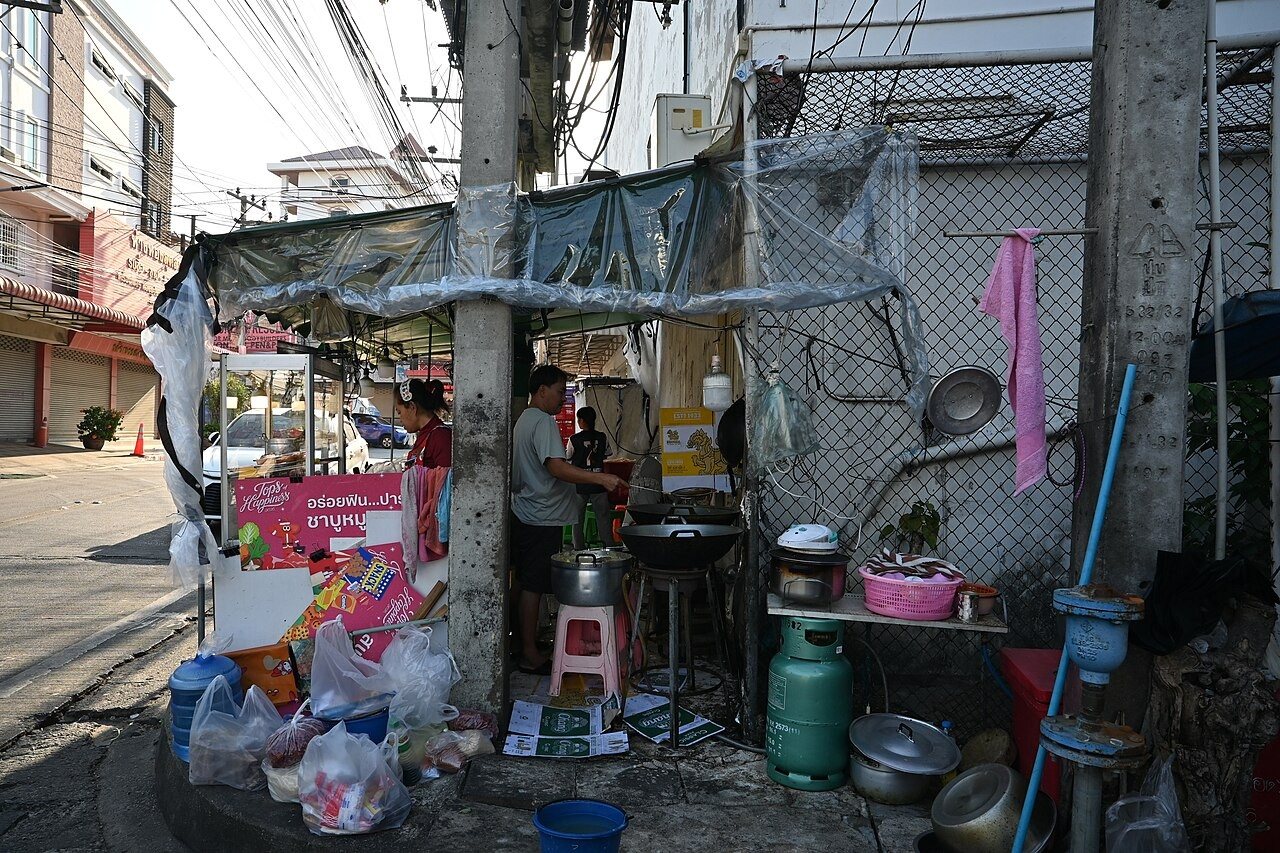
There are, however, multiple hazards in the image. To get a broader assessment, we divided the image into a grid, and asked Eevo in which cells there is the most danger. In the image below, the more danger Eevo sensed, the darker red overlay a cell has. This shows that Eevo also recognized the overhead lines as another hazard.
A welding workshop
In this example, a man welds with no face shield or gloves and a cigarette in his mouth, with sparks flying across the bench. Eevo picks the welding arc on the bench, Jev draws the box between the welding arc and the hand holding the torch.
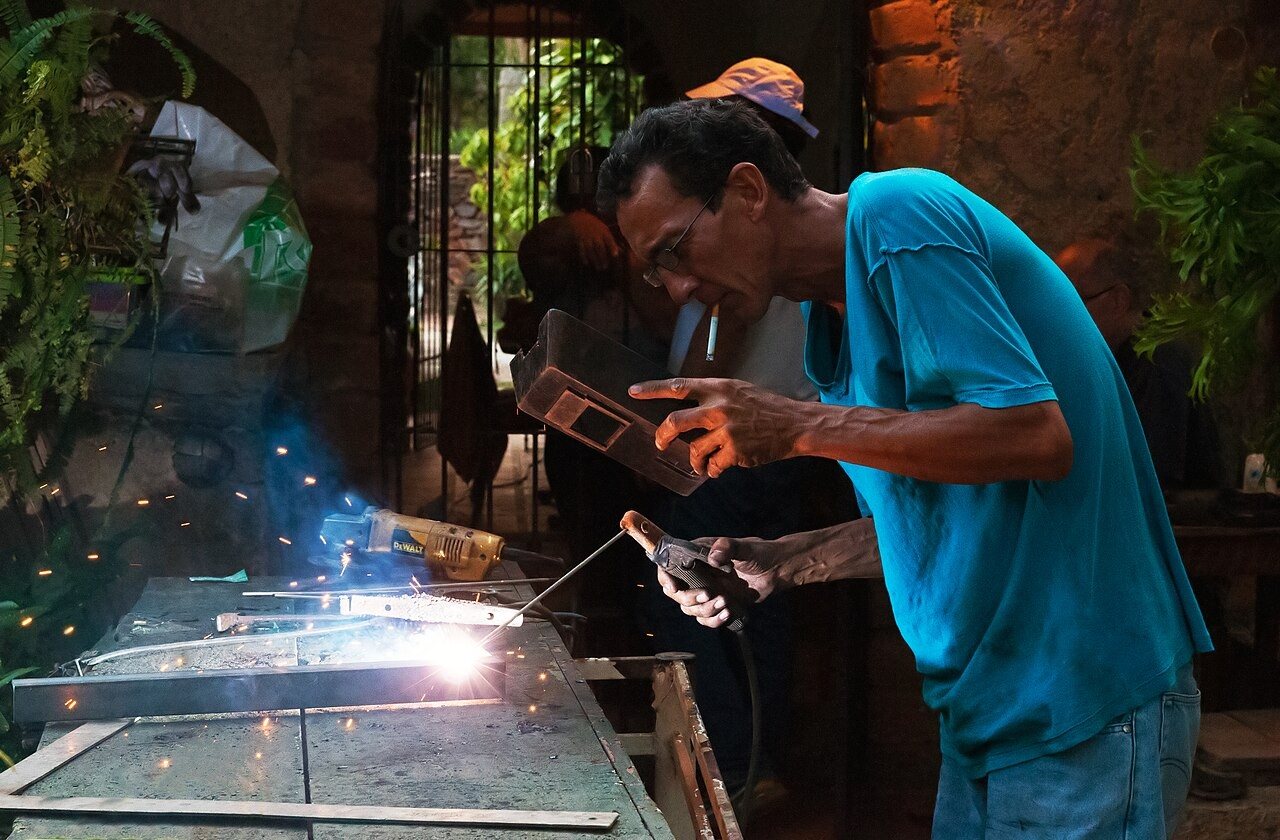
Beyond the arc, Eevo's heatmap follows the sparks across the bench.
Scooter or train roof?
In this example, we have combined two images into one. On the left, five people ride one scooter, with two small children in front of the driver and no helmets on the children. On the right, people ride on the roof of a train, where they can fall or be hit by overhead structures and power lines. Eevo correctly picks the people on the train roof, while Jev's box spans both photos.
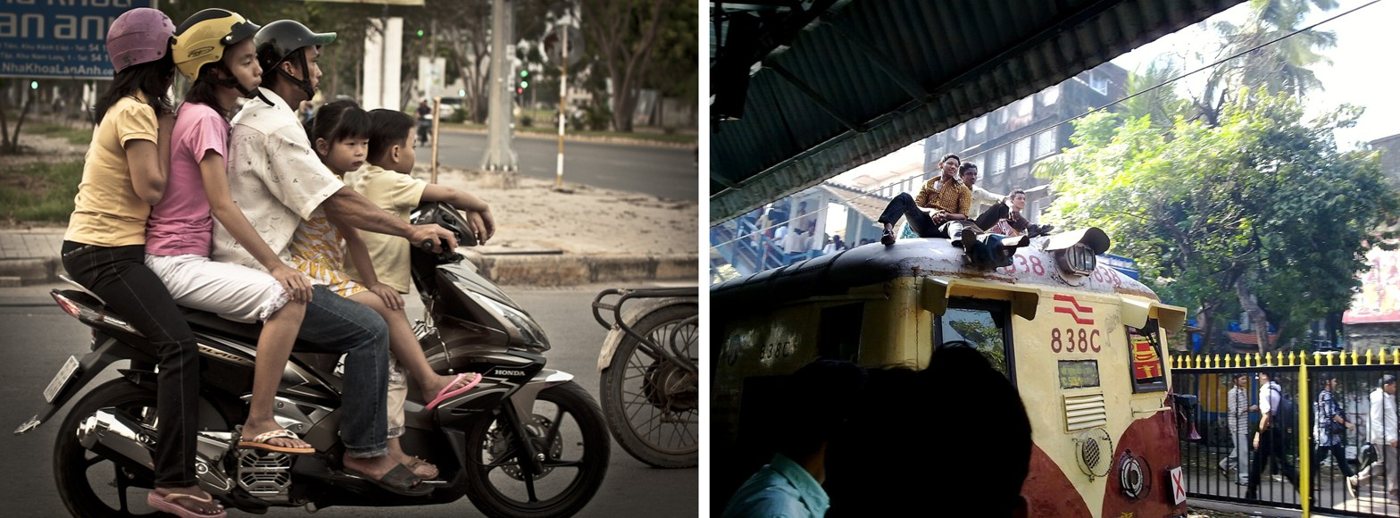
Beyond the train-roof riders, Eevo's heatmap shows it also senses the danger in the overloaded scooter, but considers it a lesser hazard.
Bear or lion?
In this example, Jev and Eevo surprisingly pick different animals as the most dangerous.
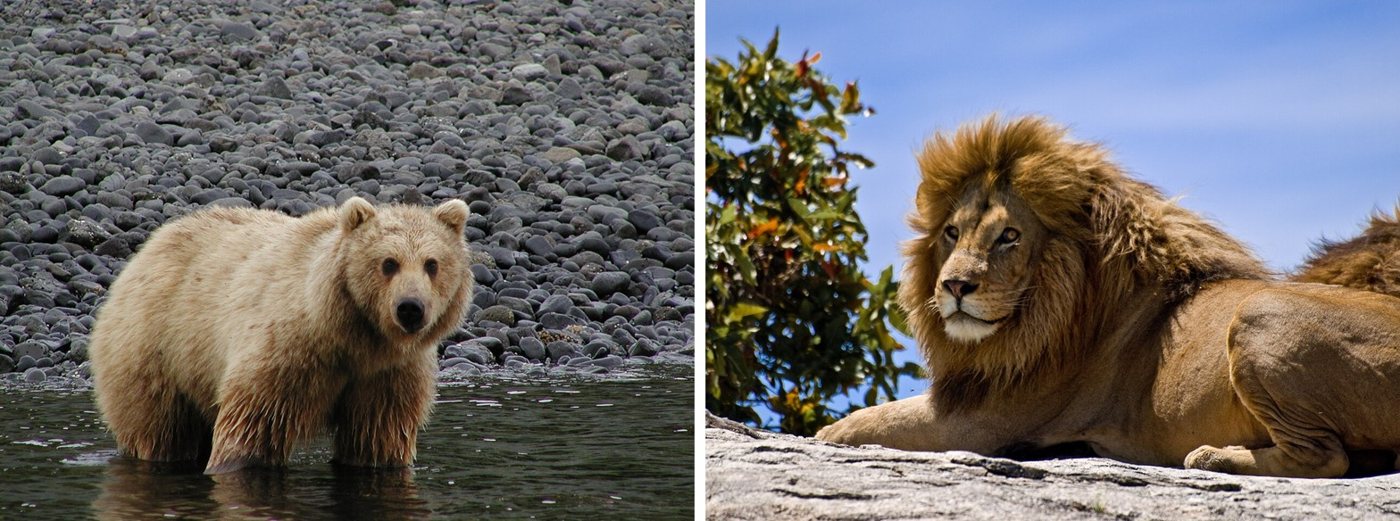
Eevo's heatmap shows this was a tough choice, with Eevo marking both animals from head to paw.
A silage pile
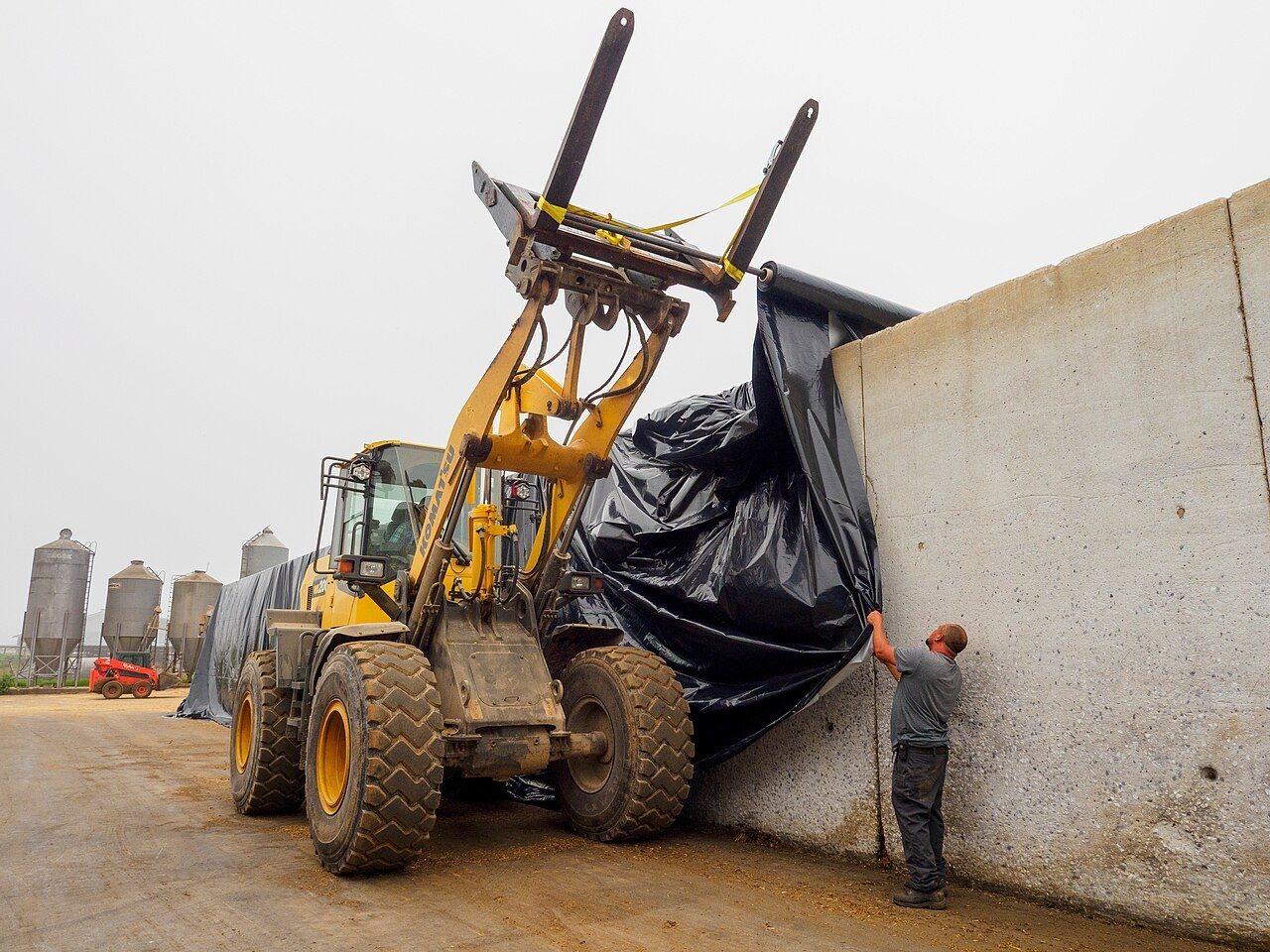
In this example, a front loader with its forks raised is pressed against a silage wall, and a worker stands between the loader and the wall pulling a tarp, right in the machine's crush zone. Jev focuses on the tires, while Eevo draws the box around the whole loader.
Chainsaw or katana?
In this example, Eevo and Jev interestingly pick different options. Chainsaw can cause severe cuts, especially when it kicks back. A katana is razor sharp, and designed for combat.
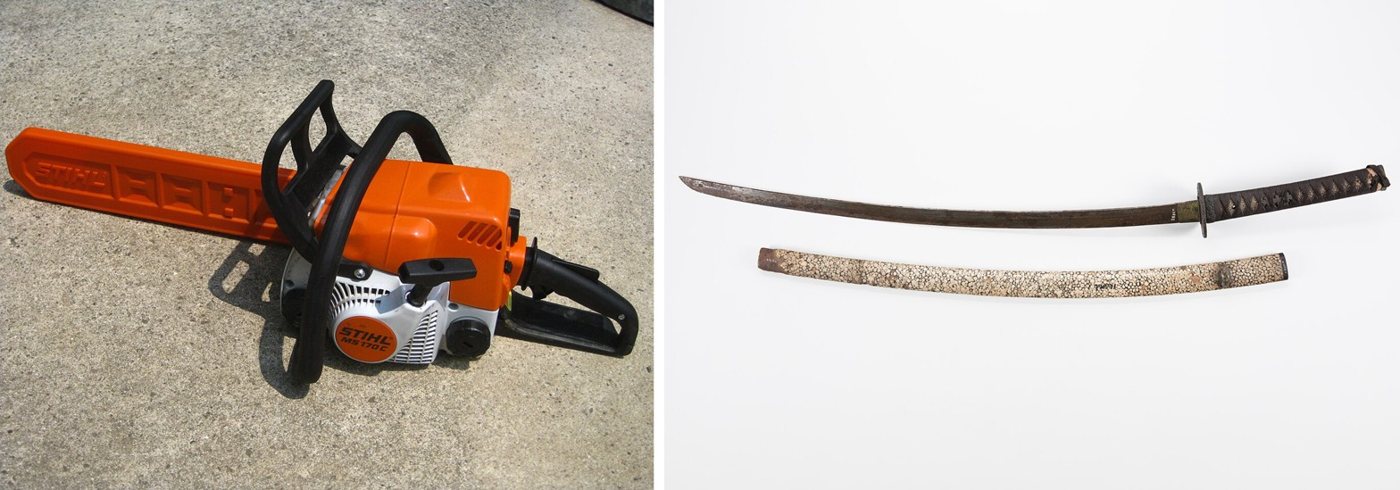
Eevo's heatmap shows it senses danger in both blades, the chainsaw's body and chain rating highest.
Firework or pool party?
This example compares two irresponsible activities: (1) lighting a firework by hand and barefoot, and (2) jumping onto a float in a crowded pool. Both models pick the firework.
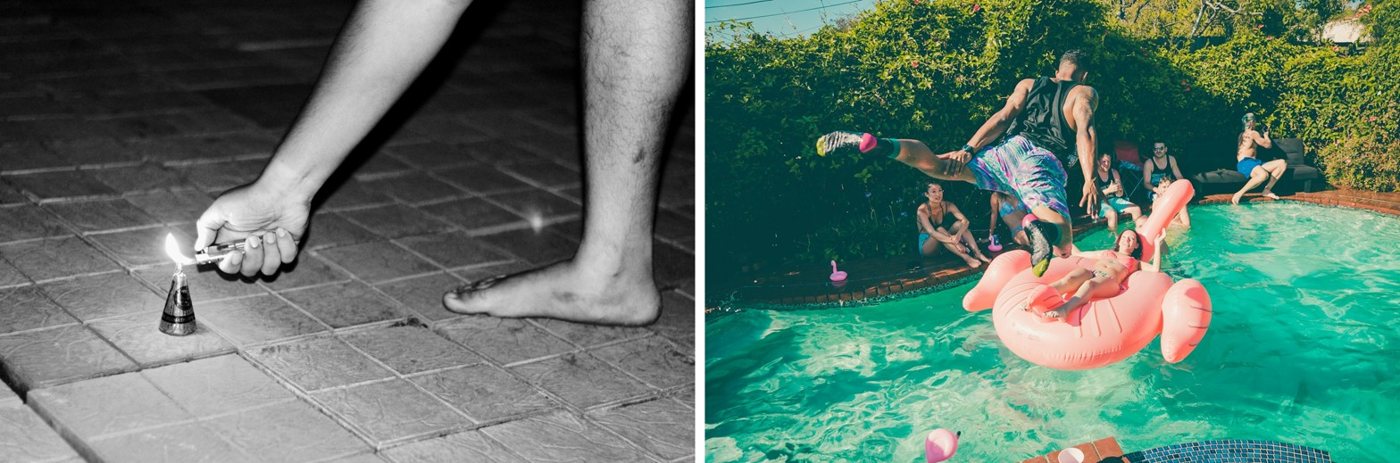
The heatmap confirms this was an easy pick, while Eevo also senses danger in the pool activity.
Mosquito or shark?
A mosquito biting skin and a great white shark lunging at a decoy. The shark is the more dangerous animal to meet, but the mosquito, which spreads malaria, dengue and other diseases, kills far more people worldwide.
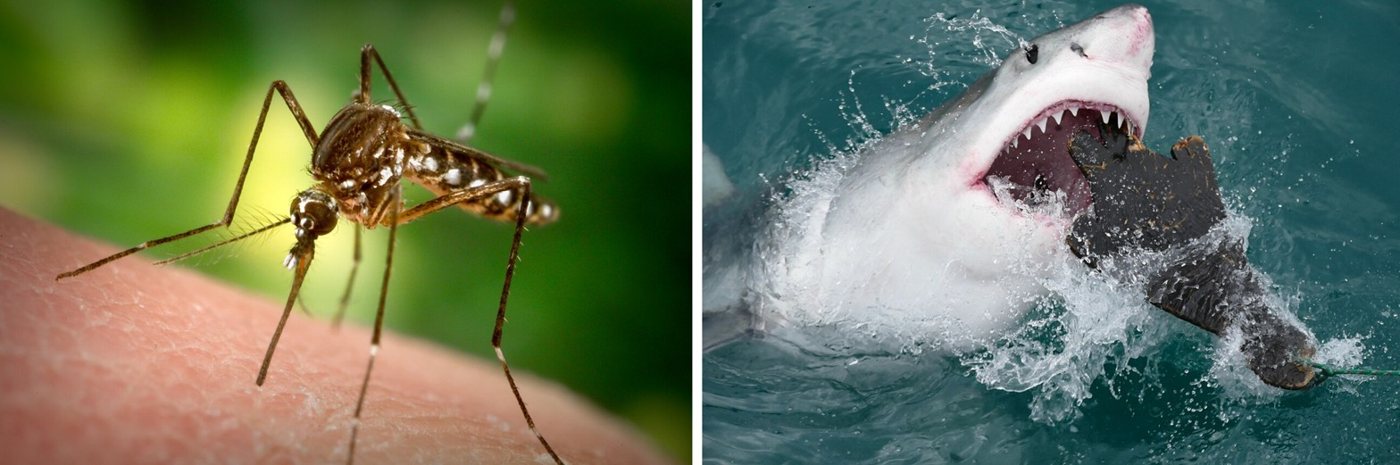
Beyond the shark, Eevo's heatmap marks the mosquito's whole body on the skin.
A garage workshop
This image shows a cluttered garage workshop. Among the clutter, a gas cylinder stands among tools and cables, with power tools, flammable clutter and things on the floor that someone could trip over. Both models pick the gas cylinder.
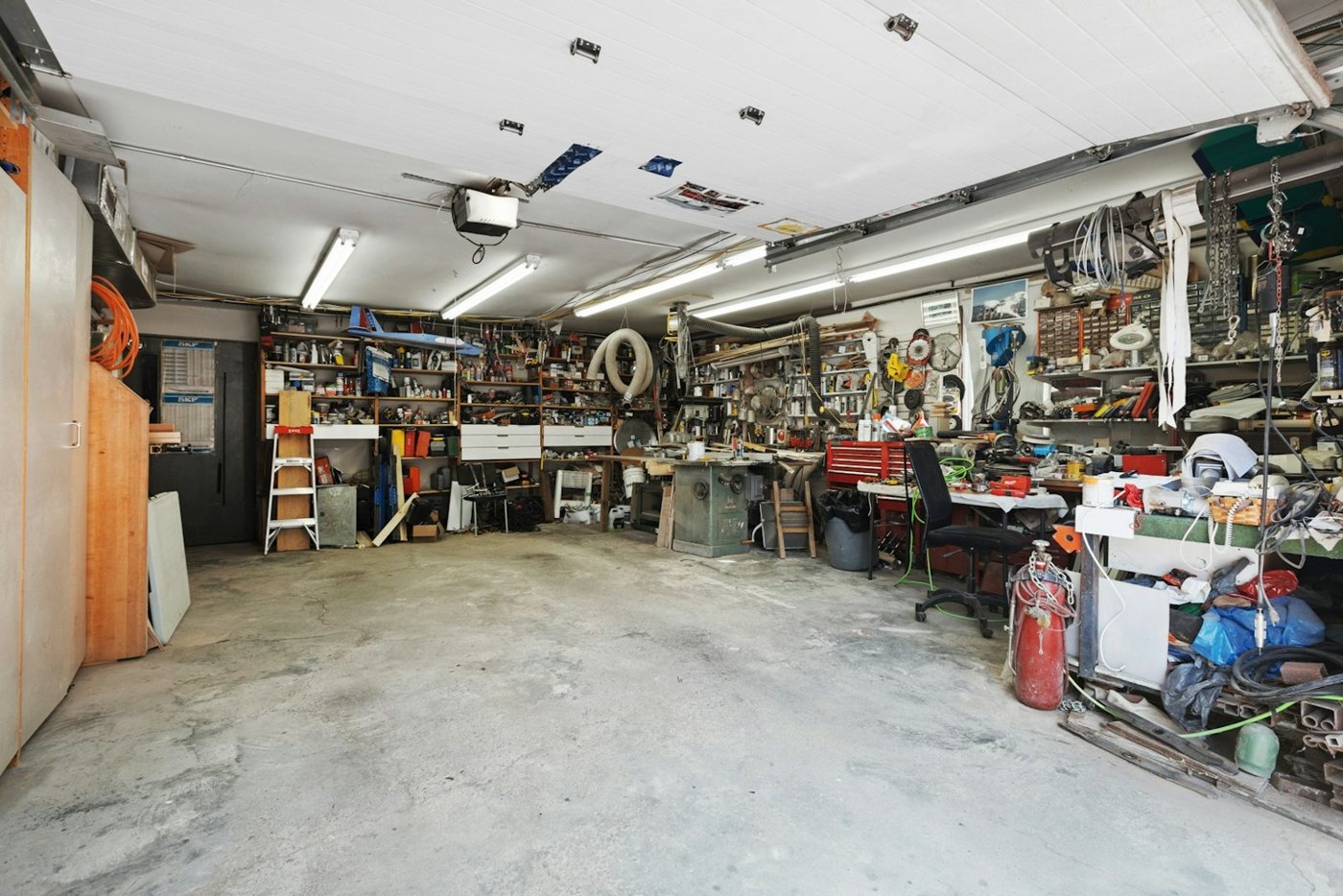
Beyond the gas cylinder, Eevo's heatmap also marks the cluttered workbench and tools around it.
A frosty morning
In this example, a car has slid into the ditch on black ice, and a recovery worker stands in the lane of the still icy road in front of the tow truck. Eevo's box covers the recovery worker and the car, while Jev's box only covers the worker. It seems Jev is confusing who is in danger and what is dangerous.
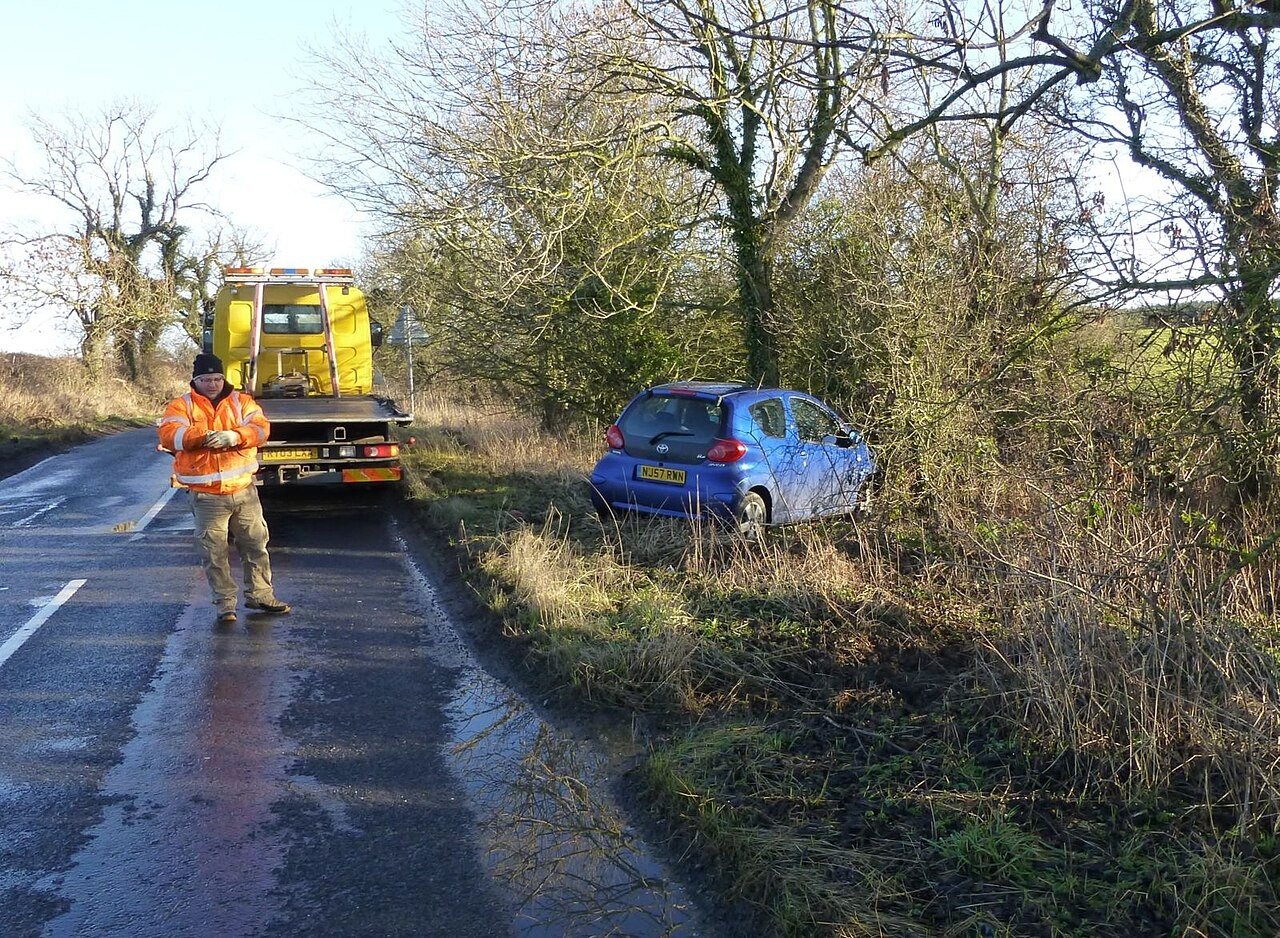
Beyond the worker in the road, Eevo's heatmap shows it also senses danger in the tow truck and the car in the ditch.
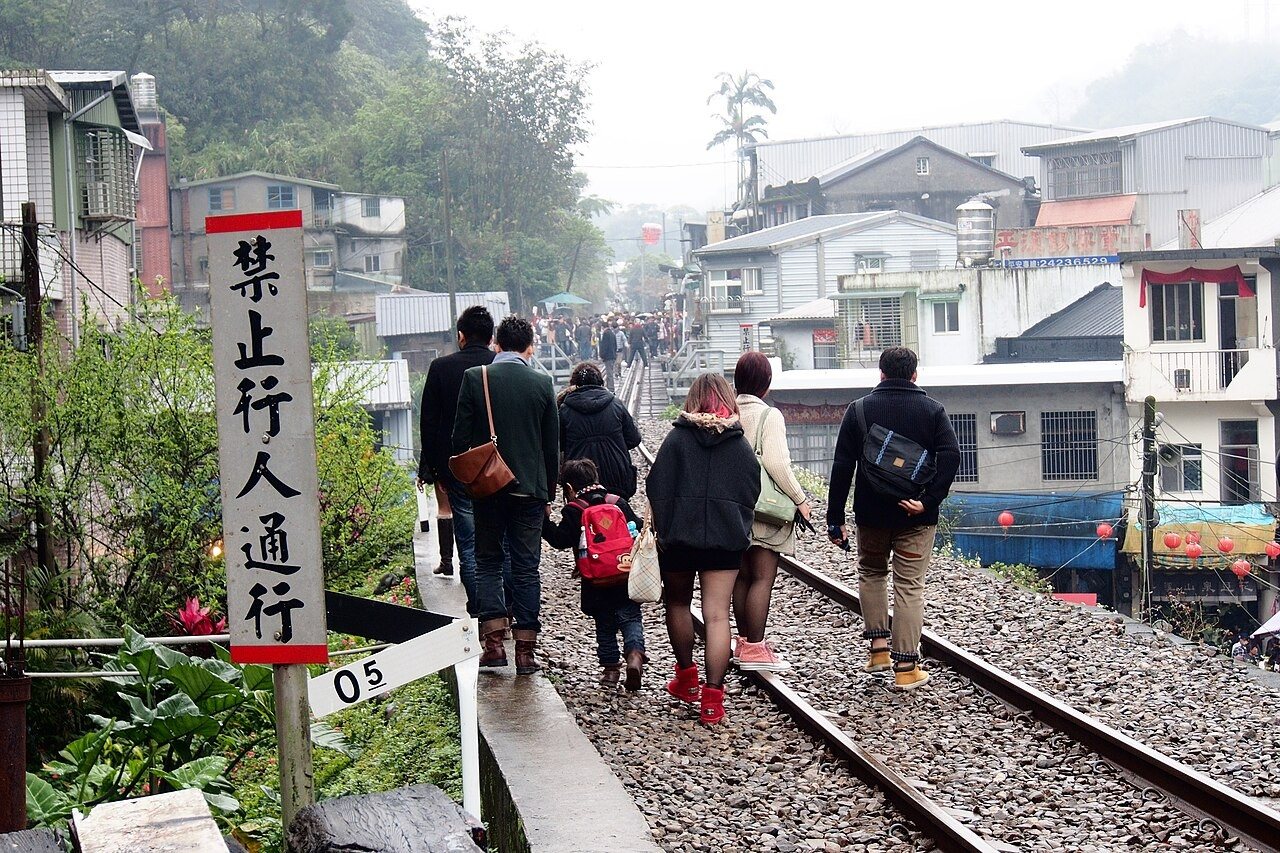
A walk along the railway
In this example, a crowd of tourists walks along a railway line and over a bridge past a sign that forbids pedestrians. Eevo picks the rails the crowd is walking on, Jev the crowd itself, repeating the pattern in the previous example, confusing "being in danger" with "being dangerous".
An eruption seen from space
This example shows an image of Sarychev Peak in the Kuril Islands erupting on 12 June 2009, photographed from the International Space Station. A column of ash rises through a hole in the clouds, with a smooth white cap of cloud on top, while ash and gas spread down the volcano's flanks.
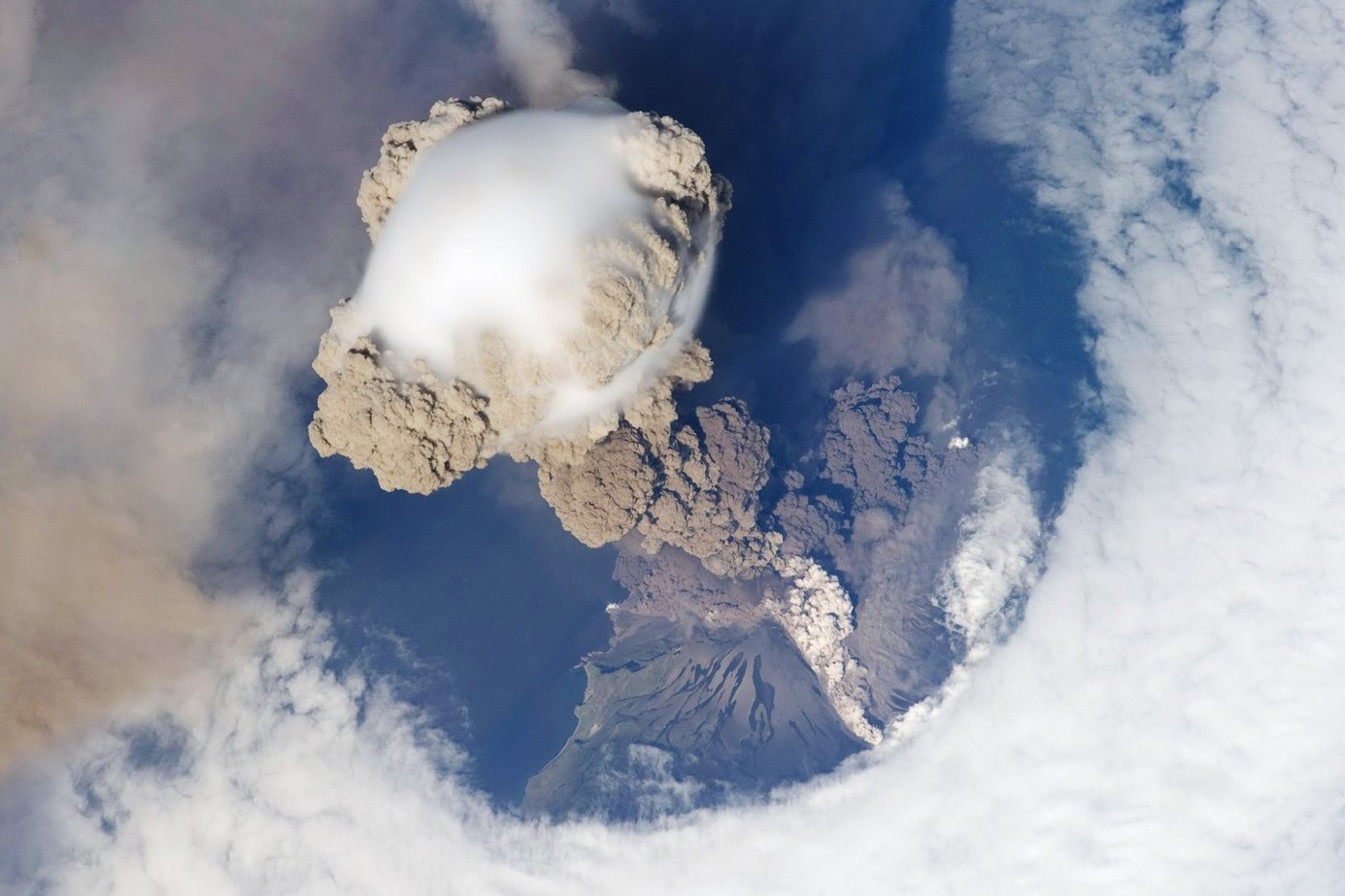
Beyond the column, Eevo's heatmap also marks the ash flowing down the volcano's flanks and the ash drifting off to the left.
As far as we know, Eevo is the leading System One model for these types of tasks. Similar as with other System One models, processing images like this is dirt cheap. The Eevo cost was $0.12 for all of the photo examples in this blog post, and $0.03 for the video example. Get started with Eevo, or check out a tutorial on hazard detection in Eevo docs.
November 17th, 2026
Juho Ojala
CTO & Co-Founder, Upright
Share: