
Impact of investing
As private credit expands, transparency must (and now can) grow with it
The private credit market is growing fast, potentially doubling by the end of 2028. But with this growth comes a challenge: what does it mean for sustainability when access to information is limited?
Published Nov 18, 2025·Updated Sep 22, 2026
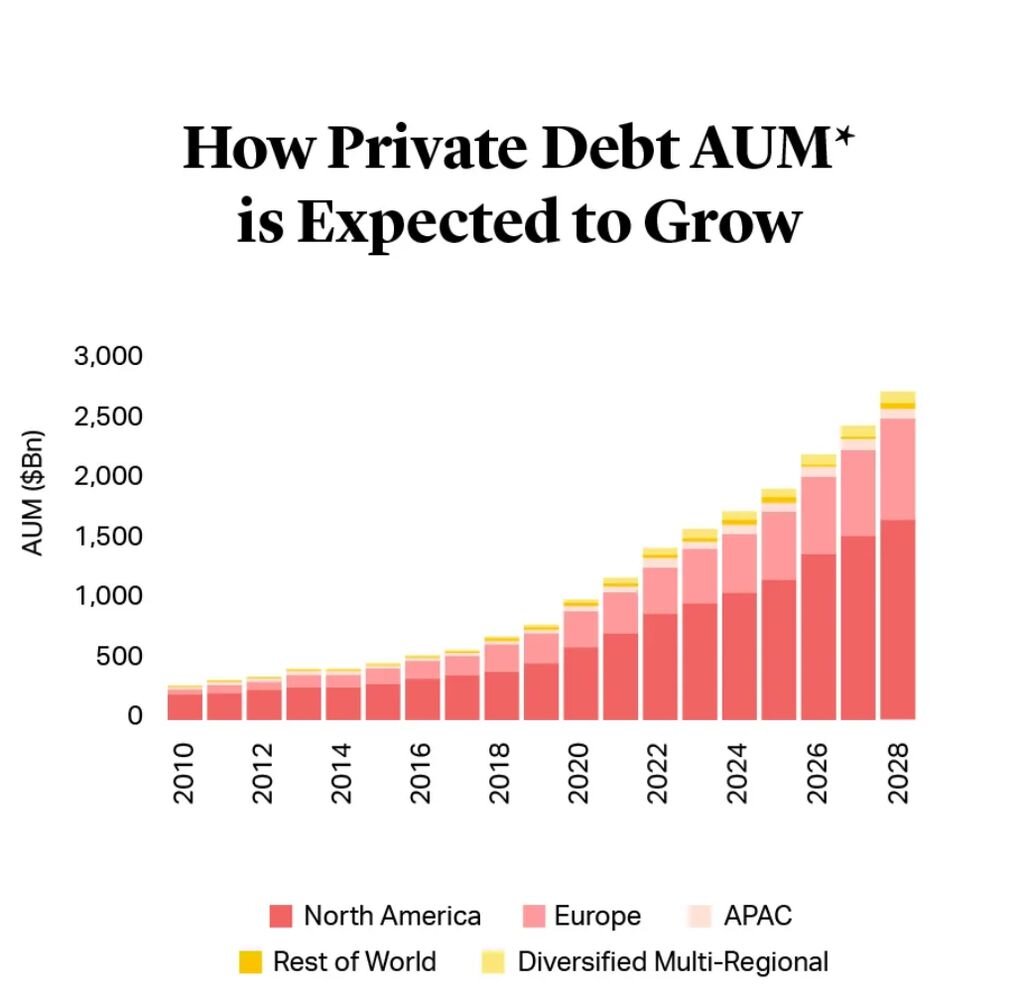
Because these are private credit investments, less liquid and longer term, private credit naturally attracts long-horizon investors such as pension funds and insurers (BIS report).
And even amid recent scrutiny around ESG, there is strong demand from asset owners, especially in Europe, who are increasing their exposure to private credit and want to better understand the risks and opportunities across key impact topics (see example). Altogether, these movements create real potential for long-term sustainable value creation.
Regulators and policymakers have raised concerns about the unique risks emerging in this fast-growing asset class (IMF; Federal Reserve), with lack of disclosure being a core challenge for the market overall. Irrespective of these risks, the direction is clear: growth is likely to continue, and the key question for asset owners is how to ensure much-needed visibility on investments so that capital ultimately flows toward companies creating sustainable, long-term value.
Sustainability disclosure in private markets remains limited, and private credit is no exception. One study found that “the median GP discloses only 8% of available ESG indicators” (ECGI). Furthermore, private credit investors face greater challenges than their equity counterparts in obtaining ESG data from portfolio companies. As lenders without ownership rights, private credit investors have limited leverage on ESG data, especially when borrowers can switch to other financiers. This challenge is compounded by the fact that borrowers are often middle-market firms, which typically disclose far less sustainability information than large corporates.
That makes the private credit asset class both an opportunity for high impact and one that is prone to high opacity. Regulatory requirements remain limited, disclosure costs are high, and reporting practices are still evolving. Regardless of these barriers or the incentives emerging to address them, the need for greater transparency is clear, and the market could benefit significantly from new solutions.
This is where outside-in impact estimates can play a transformative role. With the rise of independently modeled sustainability data, such as those produced by Upright, which assesses the impacts of companies’ business activities (their products and services), investors no longer have to rely solely on self-reported disclosures from their portfolio companies, which may arrive late, inconsistently, or not at all.
Impact data can now be available from the outset, without waiting for firms to report, enabling a clearer view of where capital is flowing and what it enables.
Impact data can now be available from the outset, without waiting for firms to report, enabling a clearer view of where capital is flowing and what it enables. At The Upright Project, we help investors assess and showcase the sustainability characteristics of this opaque asset class, bringing visibility to where capital is being deployed.
Our outside-in modeling enables investors, including General Partners (GPs) and Limited Partners (LPs), to identify sustainability risks and opportunities before investing and to quantify the impact of existing portfolios. See the Churchill Asset Management case study for an example of how investors are already using this approach to strengthen due diligence and drive transparency by leveraging information that previously wasn’t available.
While many investors are leading the charge, regulators now have an opportunity to raise the bar further. Markets are increasingly equipped to demonstrate what is good, but we also need stronger incentives to illuminate what is not.
The EU already requires financial market participants, including private market investors, to disclose sustainability information in the form of Principal Adverse Impact (PAI) metrics. At Upright, we are enabling investors to produce these regulatory metrics consistently and at scale, demonstrating what is possible and increasingly seamless for investors. You can find more information here.
Yet as the capability to measure impact externally improves, there is an opportunity to expand these disclosure obligations, both in content and in scope, across global private markets.
With financial data, it once made sense that firms produced and disclosed the information themselves. But with sustainability, the market now has independent tools to assess impact directly. It is no longer as costly or complex as before, and we can now demand even greater transparency from everyone involved.
The private credit market is expanding, and transparency must — and now can — grow with it.

Upright Project
Share: