Impact of investing
Why PhD Mikael Homanen left academia and UN-PRI to join Upright: a story of 200M scientific articles and 15M companies
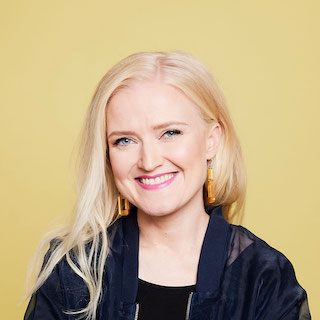
During his tenure at the UN-supported Principles for Responsible Investment (PRI), Mikael Homanen saw firsthand the difficulties financial institutions face in integrating sustainability information into their investment practices. Now, as the new Head of Scientific Research, Innovation, and Partnerships at Upright, Mikael shares how he plans to tackle this challenge as part of a Finnish underdog impact data company.
Published Jun 14, 2024

Let’s cut straight to the point: You are a successful ESG researcher that left a 7-year tenure at UN-PRI, where you were heading product research and innovation, to join a small Finnish impact data company. Why?
“I didn’t feel like I had a choice. I feel lucky that Upright let me join. I remember the awe of first discovering Upright some years ago and realising it could solve a range of key challenges I was experiencing firsthand in the academic and sustainability space.
To go back to the beginning: during my academic years researching the sustainability practices of banks, institutional investors, and corporations at institutions such as Wharton, Chicago Booth, and Bayes Business School, I approached ESG issues with the view that they were multidisciplinary problems. However, I felt that, in practice, they were being tackled mainly within each respective field. I did my best to connect with every academic field I could, establishing a small research network and even creating tools to help others review the important insights being generated by various disciplines. Another challenge I faced within academia was the lack of resources to create the new sustainability data I believed the world needed.
I was then fortunate to come across the UN-supported Principles for Responsible Investment which had been collecting sustainability data from financial institutions worldwide for years. For seven years, first as an academic consultant and then as a full-time staff member, my role involved supporting PRI by implementing programs that would help voice their data and support investors globally in integrating sustainability into their investment practices. During this time, I continuously learned why it was so challenging for them to consider corporate impact in their investments.
With Upright, I was immediately impressed to find an organization that was not only creating solutions to address many of those challenges but also giving a voice to academia in the process. It felt like two major forces were finally being fully merged: science and data. For me, academia has always been and will always remain full of societally relevant knowledge, and I truly enjoy my continued role in helping voice the latest science to enable global progress in sustainability where possible.

What is it that most fascinates you about the net impact model that Upright is building?
“Let’s use cigarettes as an example:
Many have read Merchants of Doubt, the book by historians Naomi Oreskes and Erik Conway, which explains how companies ran effective campaigns to mislead the public and deny well-established scientific knowledge. Readers have been shocked to discover that the negative health outcomes of cigarettes were known for decades before appropriate scientific consensus or public awareness developed.
I have always wondered what the world could have looked like if we had known and reacted sooner. Just imagine a world where science directly warned about the negative health outcomes of cigarettes and placed those insights directly on the cigarette packages themselves!
Upright is skipping the institutional channels and taking science directly to everyone.
Effectively, that’s what Upright is doing. Upright is bypassing the institutional channels and taking science directly to everyone. I find this to be one of the most incredible and powerful initiatives being defined globally at the moment, and Upright is one of the few organizations that have taken on this challenge.
From now on, for every new negative or positive outcome created by private sector activities, we will have a greater chance of stopping the negatives and embracing the positives sooner than ever before in history.”
What kind of impact-related challenges are financial institutions facing in 2024?
“It’s not easy out there. Financial institutions globally are now dealing with new laws and expectations from their stakeholders to integrate impact and sustainability into their investment processes. Additionally, companies are expected to disclose their impact. Regulation and stakeholder expectations vary from country to country, adding to the challenge.
To me, the current regulatory challenges are analogous to climate change itself. We’ve been warned for years, and now we’re surprised that it’s all here.
To me, the current regulatory challenges are analogous to climate change itself. We’ve been warned for years, and now we’re surprised that it’s all here. For years, we’ve been expecting this flood of disclosure regulation, which everyone is now experiencing globally. Since 2017, Upright has been one of the few organizations preparing for this by making life vests for everyone – equipping investors and companies with what they need right now: the ability to measure and disclose their full impact.
My first priority now is to leverage my experience with investors and corporate sustainability data to assist in the transition for investors and corporates to adopt the Upright model’s much-needed impact solutions.”
Let’s dig deeper into Upright’s model of assessing corporate impact. Why do you believe in this model over others?
“To answer that, we need to dig deeper into what’s missing from traditional ESG data.
As someone who has been following and assessing ESG and impact data companies for 10 years, I can say that many are doing good work, helping investors integrate sustainability into their processes and firms understand their sustainability impacts and improvement opportunities. However, no one has been able to tackle two very specific structural challenges in the market:
Firstly, how do you standardise science? There’s a lot of it and it keeps developing, so how do you come up with a system that allows you to internalise the latest scientific consensus across all disciplines, without the adjustment forcing you to completely revamp your modus operandi?
Secondly, how can you create an approach that allows you to ultimately examine all the companies in the world, instead of relying on various data companies, each with their own focus area, such as public company data, private company data, industry-specific data, issue-specific data, etc.?
And this is where Upright comes in.
Upright already uses over 200 million academic sources to translate academic insights into digestible information that provides users insights needed for decision making. In addition, Upright analyses companies based on what they make – their products and services – with a product taxonomy already covering 150,000 products and services. As a result of the methodology, Upright’s corporate coverage naturally keeps increasing, and there are no blockers.
Upright hasn't covered 15 million companies yet, but that figure gives a sense of how far the model can go.
Upright hasn't covered 15 million companies yet, but that figure gives a sense of how far the model can go given its methodological design. It’s not just how much Upright is doing today, but how much Upright will be doing tomorrow that excites me. Upright has created a model that allows the use of scientific insights to understand all companies, both today and in the future. The model is comparable, scalable, and adaptable. That is what truly makes it amazing.”
You joined Upright to create new ties with academia. What’s Upright’s current plan for collaborating with researchers and scientists?
“We’ve already started a range of projects with external researchers conducting sustainability-related research with Upright’s data, such as with The Wharton School. It’s very exciting for all of us interested in this area of research. Imagine yourself as a kid gazing at thousands of stars in the sky, and all of a sudden, a company hands you a telescope, enabling you to see millions of stars. And this is the easy part – joint research is where we’re already on a strong path to develop much needed insights on various corporate impact topics.
The future area that is most exciting to me – and potentially most challenging – is the involvement of academics and subject matter experts in the impact modeling process. How can we jointly develop Upright’s methodology so that it best translates scientists’ findings into information understandable by everyone, everywhere? It’s not just about messaging what an academic knows, but rather asking a scientist to help define how their insights should be interpreted. This represents a very different co-creation model from the ones we’ve typically seen in the industry.”
What excites you about Upright’s future potential in changing the sustainability discourse?
“So far, the wider sustainability discussion has failed to get to the essence of the true role of consumers in sustainability. Yes, societies have long publicly supported consumer platforms that enable sustainability data to be used in purchase decisions, and some of the latest regulations have set new expectations for companies, requiring them in certain cases to ask their clients about their sustainability preferences. However, by and large, the discussions still revolve around financial institutions and companies needing to change.”
Ultimately, while companies set the supply, they also meet the demand. To reach broader societal sustainability aspirations, we need more scalable solutions that enable consumers to be more proactively involved in shaping demand paths towards positive impact outcomes.
Already, Upright is enabling a new conversational platform for institutions to ask, ‘Should we be selling this product in the first place?’ But the bigger discussion Upright is opening the doors to involves the millions of consumers out there who are asking, ‘What should I buy next?”
Got a collaboration in mind? We’d love to hear from you – drop us a line !
June 14th, 2024
Upright Project
Share: