
CSRD-compliant double materiality assessmentin weeks, not months
Data trusted by 300+ leading organisations











WHAT YOU GET
Audit-ready DMA without the six-month projectUpright's AI-enabled data engine delivers impacts, risks, and opportunities across all ESRS sustainability matters, with a team workload measured in weeks, not months.
90% done from day one
Input your company-specific data and Upright's engine produces a science-based DMA baseline across all 80+ ESRS sustainability matters. Every adjustment and refinement is logged with a clear audit trail your auditor can follow.
Zero workshops required
No stakeholder rounds, no facilitation burden. The model is built on product and value chain data, rooted in science rather than surveys or subjective stakeholder opinions.
Audit-ready and assurance-supported
100% pass rate across 150+ external audits, including all Big Four. Methodology documentation and an assurance guide are included as standard deliverables.
Skip the annual manual grind
Upright's data engine – proven in 57,000+ assessments – keeps your double materiality results dynamically updated, so you can reflect real-world changes without starting from scratch.
200+
Double materiality assessments completed
100 %
assurance pass rate across 150+ external audits
300M+
scientific articles underpinning results
90%
of customers skipped stakeholder input altogether
Already conducted a DMA?
Your existing DMA is a valuable foundation. Upright builds on it, re-grounding results in your actual product and service mix with science-based evidence, and keeping everything continuously updated as your business changes. No more yearly marathons, no more starting from scratch.
How it works
Four steps to your audit-ready double materiality assessmentA resource-efficient assessment with clear steps.
- Input dataSubmit your products and services with revenue weights, additional indicators, geographical data, and financial statements to Upright.
- Science-based analysisUpright's data engine identifies material impacts, risks, and opportunities across all sustainability matters, integrating your company data with 300M+ scientific articles and public databases. Materiality thresholds are set based on results from 70,000+ company assessments, ensuring your results are comparable and grounded in real-world benchmarks
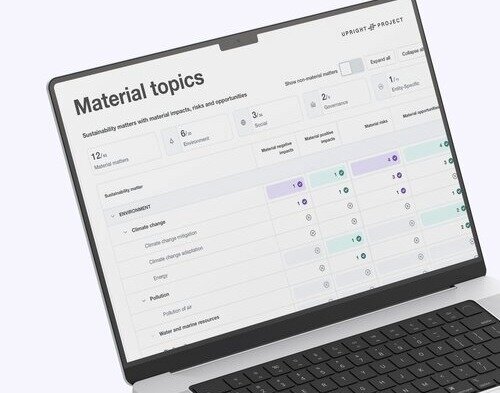
- Results, deliveredAccess your DMA results, visualisations, methodology document, assurance guide, and list of ESRS data points.
- Results tailoring & easy updatesFine-tune IROs and align thresholds using company-specific inputs. Stakeholder insights can be integrated where relevant
references
What our customers say

Methodology
How it works: From science to decision-ready DMA
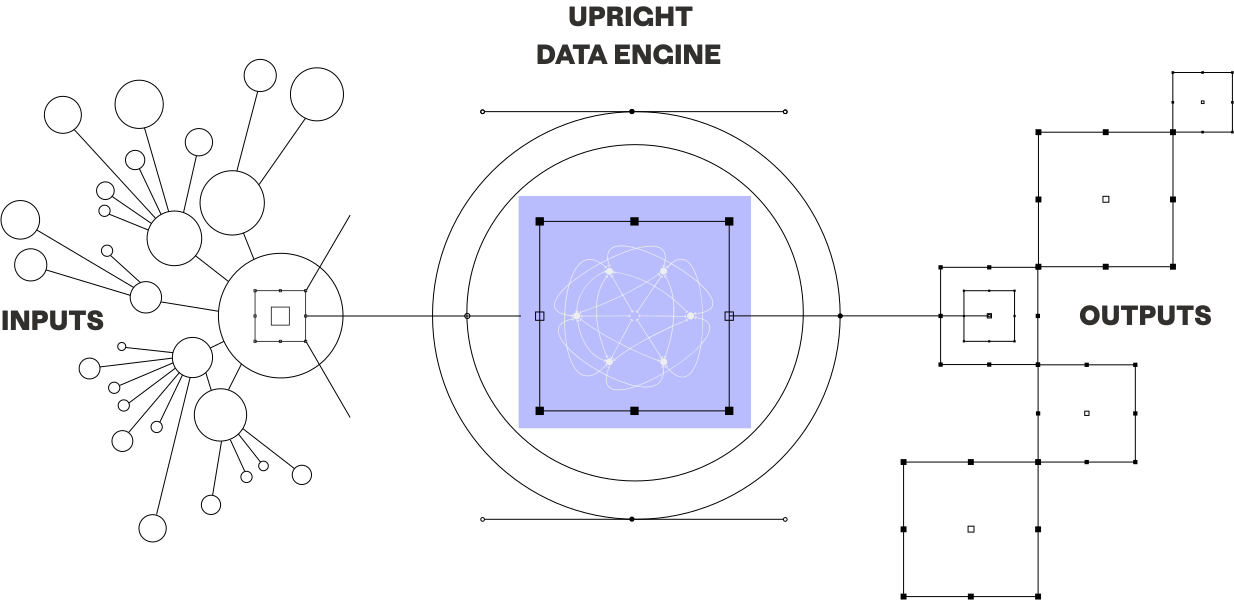
(tailored for each of the 57,000+ companies in our model, reviewed by you)
- Product and service split
- Geographical and sustainability indicators
- Financial statements
(consistent across all companies):
- Scientific articles: CORE research papers database of 300M+ scientific articles
- Third-party databases: E.g. ILOSTAT, World Bank, The World Economic Forum, OECD
Using advanced large language model -enabled technologies, Upright’s data engine assesses:
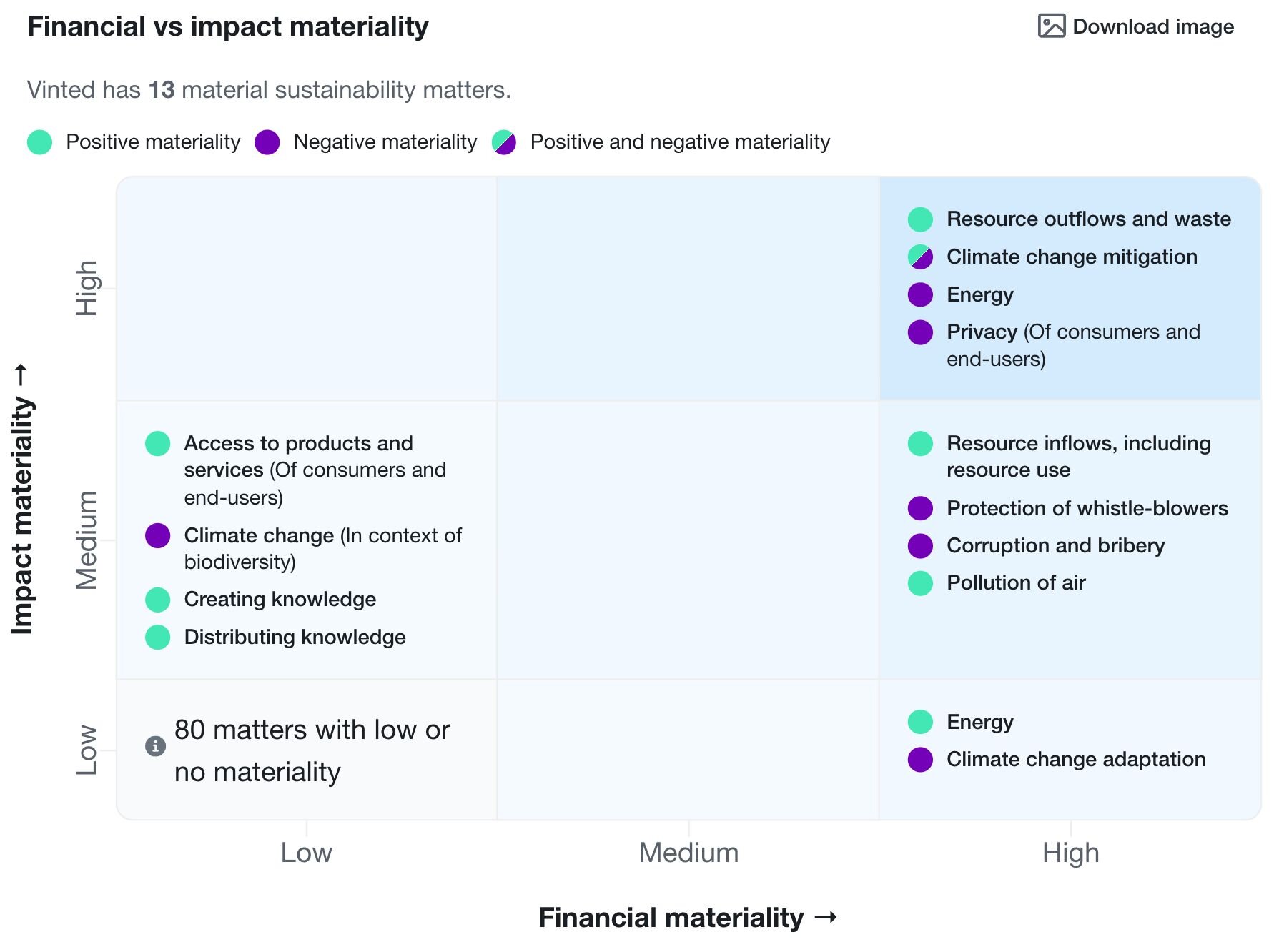
- Impact materiality: Scale, scope, irremediability and likelihood of impacts
- Financial materiality: Magnitude and probability of financial risks and opportunities
- Materiality thresholds: Set based on the results of 57,000+ companies
What you receive
Using advanced large language model -enabled technologies, Upright’s data engine assesses:
- DMA results
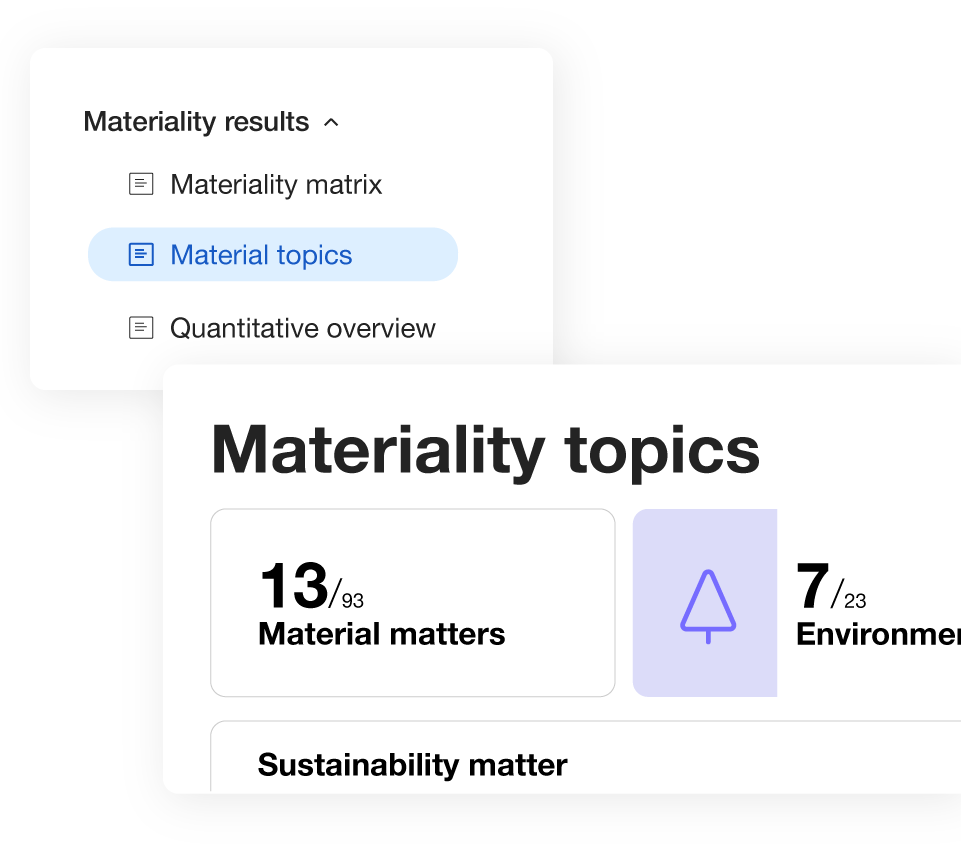
- Visual summaries of the results
- Relevant ESRS data points
- Methodology document
- Financial effects
BEYOND COMPLIANCE
The DMA that does more than tick boxesUpright customers use their DMA not just for CSRD compliance
Sustainability strategy
Data-driven clarity on which sustainability topics actually move the needle for your business, not just a compliance checklist.
Financial effects
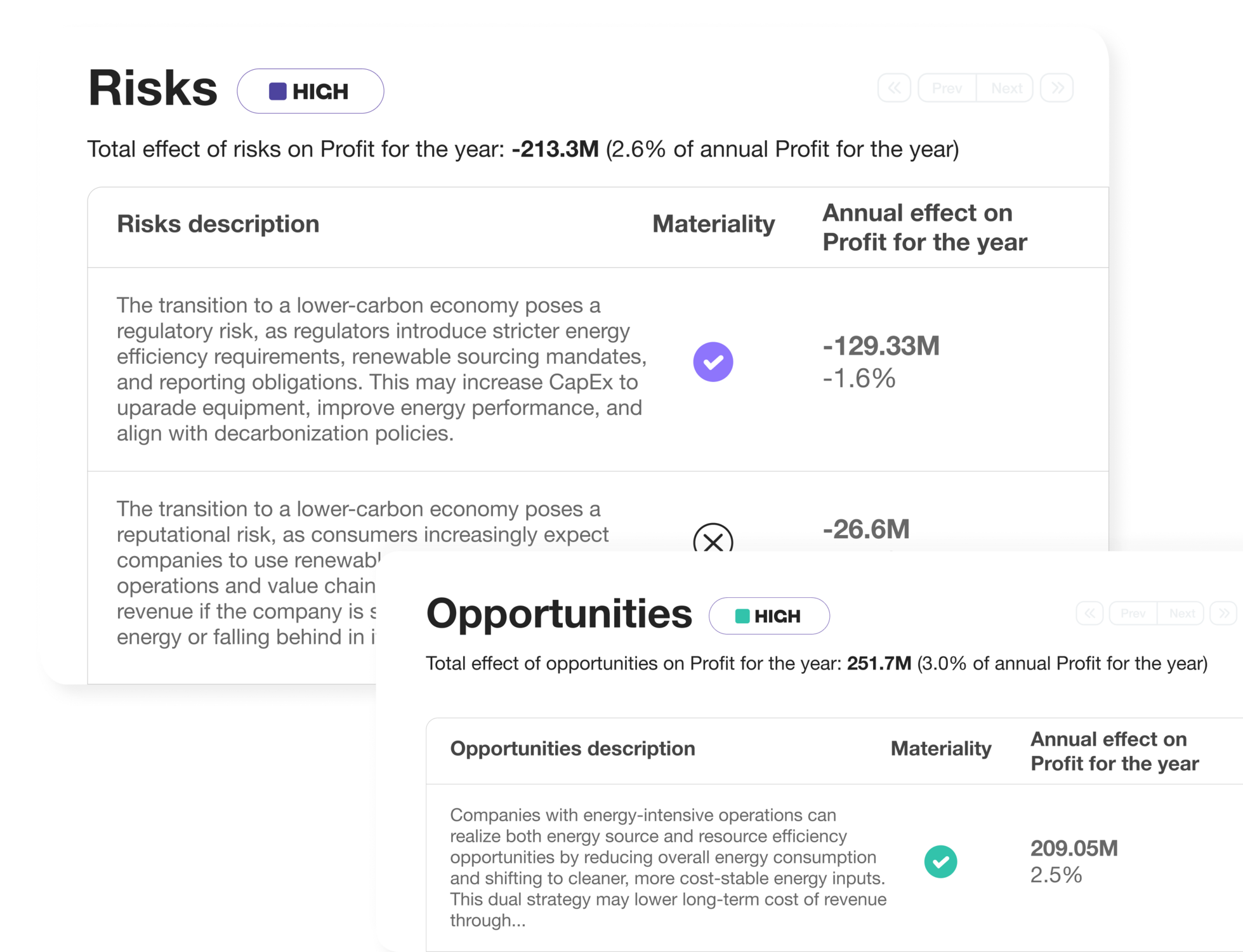
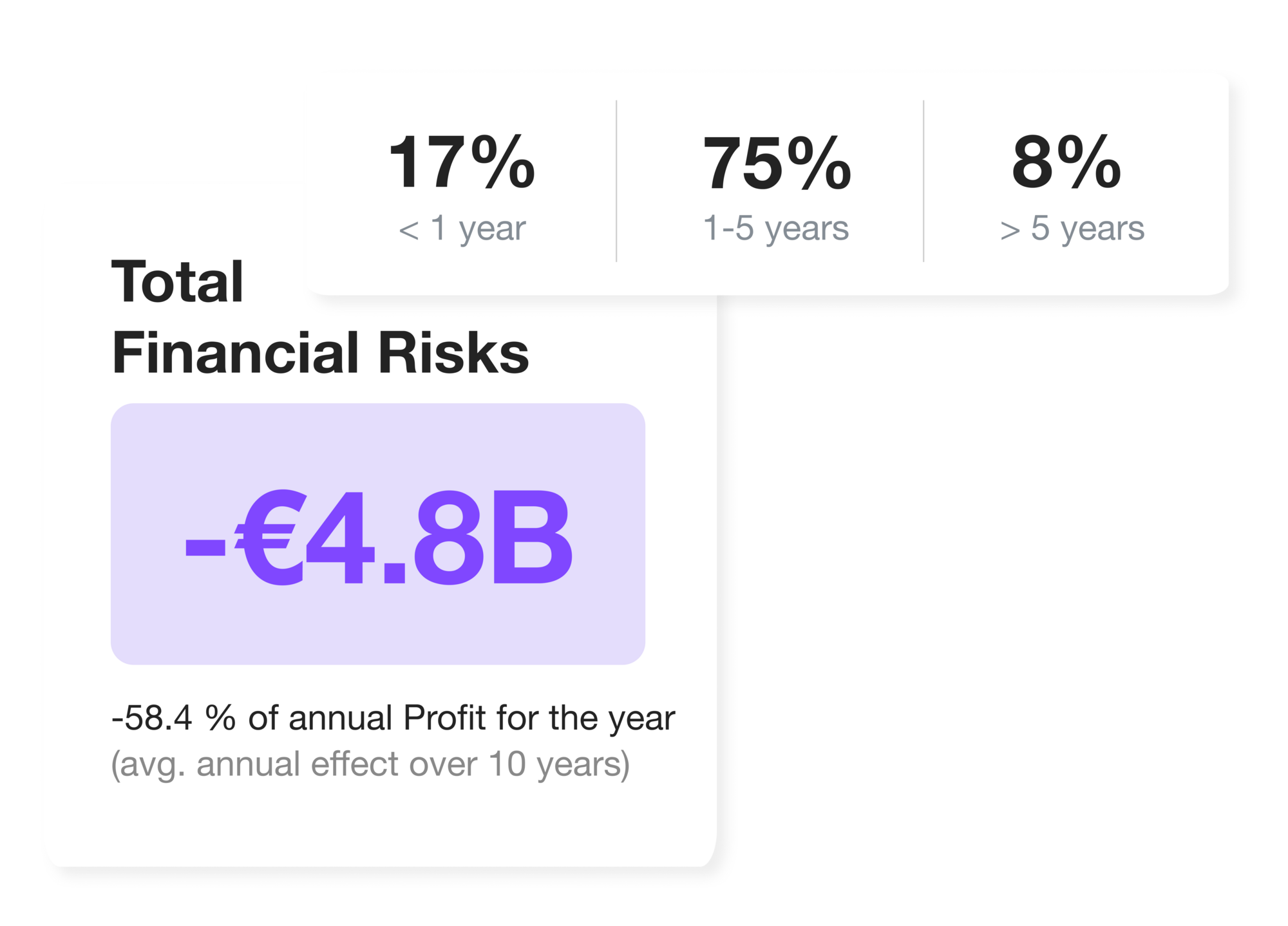
Translate material sustainability risks and opportunities into P&L, balance sheet, and cash flow effects, using the same financial thresholds as non-sustainability risks.
One dataset, multiple frameworks
One dataset, multiple frameworks. Upright structures your results for ESRS, TCFD, ISSB, and SB 261, eliminating duplication across reporting workflows.

regulatory landscape
Where does your company stand on CSRD?Following the EU Omnibus revisions, CSRD scope has shifted. Here is what the updated thresholds mean in practice.
EU entities, mandatory from FY2027
Reporting required if: net turnover >€450M AND employees >1,000. Member States may apply an exemption window for companies below the new thresholds.
Non-EU parent companies, mandatory from FY2028
Reporting required if: EU revenue >€450M for 2 consecutive years AND EU subsidiary/branch revenue >€200M.
The DMA requirement
A double materiality assessment is the mandatory first step of every CSRD report. It determines which sustainability topics are material and which ESRS data points you must disclose.
Framework alignment
Upright's DMA results are structured for ESRS and produce data usable across TCFD, ISSB, and SB 261. One process, multiple frameworks covered.
